

A feature flag can let a team release code before enabling a new experience for everyone. The cost arrives later if both paths remain indefinitely. Tests multiply, support cannot tell which experience a customer saw and developers hesitate to remove code. Treat the flag as a temporary release tool with its own lifecycle.
Name the decision it controls
Describe the behaviour behind the flag, the eligible audience and the person who can change exposure. Keep release flags separate from entitlements that represent what a customer has purchased. The feature toggles article on Martin Fowler's site distinguishes categories with different lifetimes and operational needs; that distinction helps avoid treating every boolean as the same kind of control.
Write down the default if flag configuration cannot be loaded. For a redesigned search page, the fallback might be the established experience. For a data migration, a simple switch back may be impossible because writes have already changed the stored representation. Review data compatibility before calling a flag a rollback plan.
Choose a cohort and a stop condition
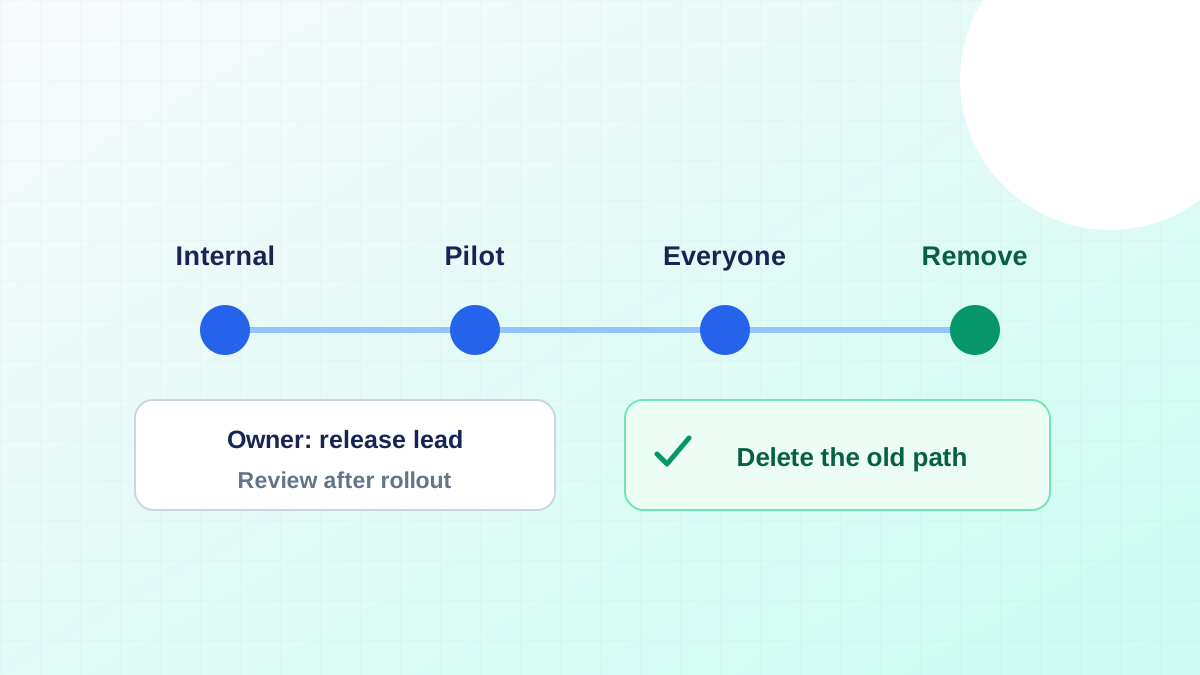
Start with a group whose experience the team can observe. Record the flag variant with relevant diagnostic events so failures can be compared using the request-tracing workflow. Choose the condition that pauses rollout, such as a broken task or an unexpected error pattern. Do not expand exposure solely because a calendar date has arrived.
Test both enabled and disabled paths, including a session that spans a configuration change. Some workflows need a stable variant for the duration of a task. A user should not start one checkout flow and finish in another simply because the rollout percentage changed between requests.
Budget for removal
Create the cleanup task when the flag is introduced. Include the obsolete branch, configuration entry, related tests and documentation in its scope. After rollout, verify that no active consumers require the old path before deleting it. A review date is useful even when the final removal date depends on evidence.
For an MVP build, put this lifecycle beside the release boundary. A flag should help a team learn from a controlled release without leaving every experiment permanently embedded in the application.