
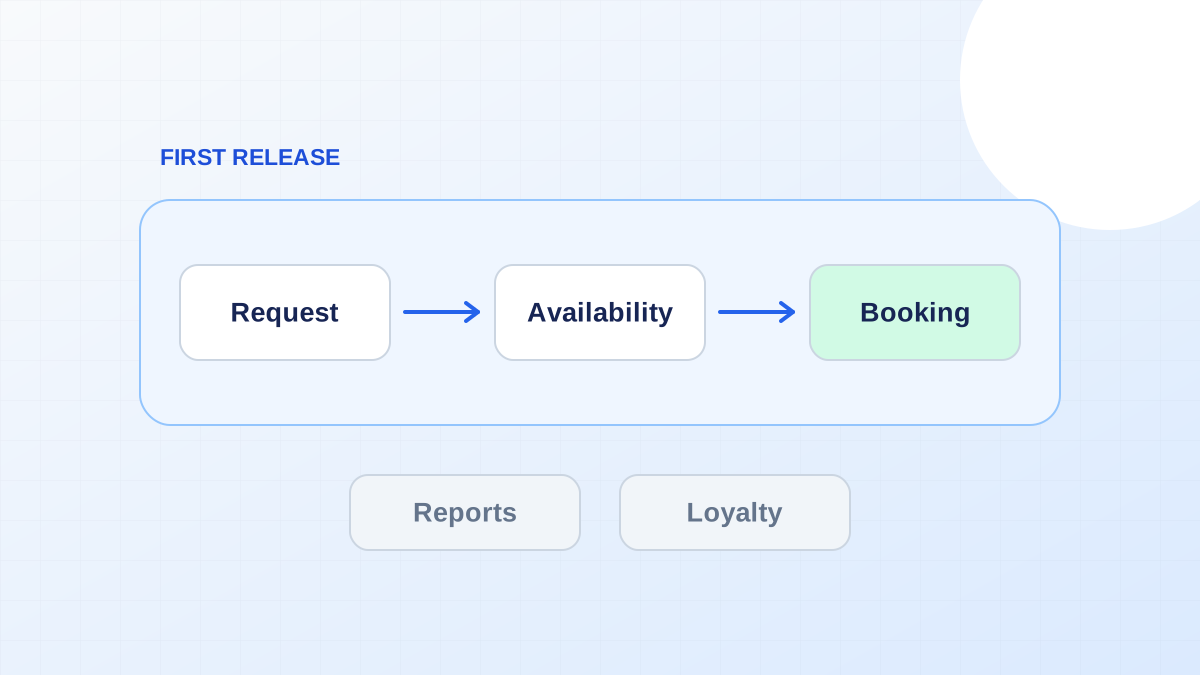
A first release can contain few features and still be too broad. A booking product that partly supports discovery, payments, loyalty and reporting gives a team four unfinished journeys to explain. A narrower release lets a customer request a slot, receive confirmation and see what happens if that slot is unavailable. That complete path gives the team something concrete to observe.
Write the task before the backlog
Choose one user in one situation. For a workshop booking tool, the task might be: find an available session next week and reserve a place. Describe the starting information, the decision the user makes and the evidence that the reservation succeeded. Avoid instructions that name buttons or reveal the intended route; the Nielsen Norman Group guide to task scenarios explains why realistic goals make usability sessions more useful.
Now list what must work for that task to finish. Availability, reservation state and confirmation belong in the release. A custom dashboard may not. Keep a separate list of assumptions, including whether someone will book without speaking to the organiser first. A feature that does not help test the chosen assumption needs a separate reason to enter scope.
Include the awkward ending
The happy path is only part of the product. Decide how the interface handles unavailable bookings, an email is delayed or a reservation is cancelled. A small release can handle an exception manually if the handoff is visible and someone owns it. Write down the handoff so the team does not mistake a manual workaround for finished automation.
Agree on the next decision
Before testing, name the evidence that would change the roadmap. Observe task completion, hesitation and requests for help. Record what happened instead of treating every feature request as a commitment. If users cannot finish because the availability information is unclear, improving that screen is more useful than adding loyalty points.
Bring the journey, open assumptions and release boundary into a discovery sprint. They form a practical brief for an MVP build: a complete task to ship, exceptions to support and a decision to make after people try it.