The team at Daphnis Labs redefined what’s possible for Urbanface. They delivered a bespoke, animation-heavy website that remains incredibly quick and functional. The…
AR & VRapp developmentfor real-world tasks.
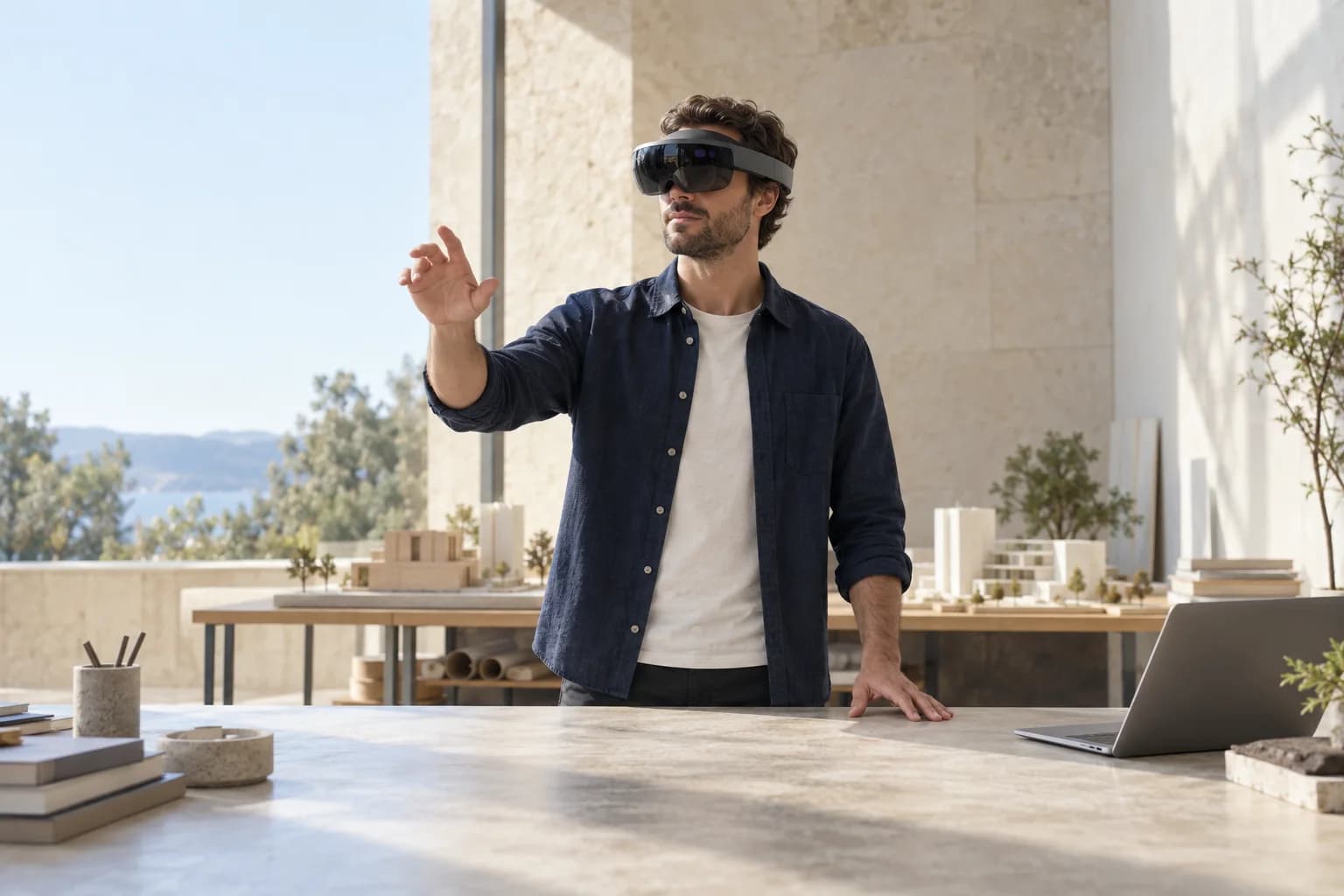
We build immersive training, product visualisation and interactive applications for phones and headsets.
3D contentUser interactionsBusiness data
Immersive application
Mobile ARHeadset VRUsage analytics
Tools & technologies
- Unity
- OpenXR
- ARKit
- ARCore
- WebXR where appropriate
- APIs
- 3D asset pipelines
What Can We Build?
Discuss Your BuildAR Product Viewers
VR Training
Guided Simulations
Spatial Interfaces
Interactive Demos
Connected XR Apps
What You Actually Get
- Immersive product strategy
- Spatial UX and prototyping
- AR and VR application systems
- Content management and delivery
- Business-system integrations
- Device validation and analytics
- Immersive product strategy
- Spatial UX and prototyping
- AR and VR application systems
- Content management and delivery
- Business-system integrations
- Device validation and analytics
Practise an assembly before touching the equipment.
Read this example
Fit the protective cover onto the practice unit.
- Part selected. The cover is highlighted with its intended fitting position. Practice task ready.
- Alignment checked. The cover remains held until it reaches the correct orientation. Guided placement.
- Fit confirmed. The cover snaps into position and the task is recorded. Training step complete.
A spatial training task gives feedback on alignment before recording completion.
Scripted illustration using sample information, not a client case study or a live system.
How We Deliver
Step 1 / 5
Outcome
- Outcome
- Choose
- Prototype
- Build
- Operate
Choose Your Starting Point
Spatial Prototype
- One task on a target device
- Interaction and hardware validation
Application Build
- Agreed content and user journeys
- Selected devices and business integrations
Rollout & Expansion
- Additional content or device coverage
- Field feedback and application improvements
- Founded in
- 2013
- Projects delivered
- 550+
- Client countries
- 43+
- Global offices
- 3
FAQs
When is AR/VR App Development a good fit?
It fits training, visualisation, guided work or customer tasks where spatial context improves comprehension or action.
Which technical decisions matter first?
The task, physical environment, AR versus VR mode, devices, content ownership and system-of-record boundaries matter first.
Can it connect to our existing systems?
Yes. Identity, product, training, operational and analytics APIs can be integrated within approved permission boundaries.
How is the work tested?
We test comprehension, input, scale, performance, interruption, connectivity and content updates on target devices and in the real context.
What do you need before starting?
We need the target task, users, environments, hardware, 3D content, business data and field-test access.
What affects the delivery timeline?
Platform count, interaction depth, content readiness, enterprise integrations and field validation determine delivery.
What boundaries should we agree before delivery?
We choose AR, VR or a shared foundation from the working context and hardware constraints, not from novelty. Spatial technology must improve a defined task. Content access respects permission and freshness. Field support and device constraints are tested.
Which task would benefit from a spatial view?
Bring the user journey, target devices and available 3D content.