
Audit
We inspect the affected journey and check whether its measurement can be trusted.
Share the slow pages, affected devices and available performance evidence.
Store findings report
Agreed scope · dependencies · acceptance criteria

Connect storefront performance, customer behaviour and experiment design to a measurable problem.
Identify what delays a usable page in the journey that matters.
Images, theme assets and third-party scripts
Affected pages on agreed devices and connections
Product detail, functionality and visual quality
We inspect the affected journey and check whether its measurement can be trusted.
Share the slow pages, affected devices and available performance evidence.
Agreed scope · dependencies · acceptance criteria
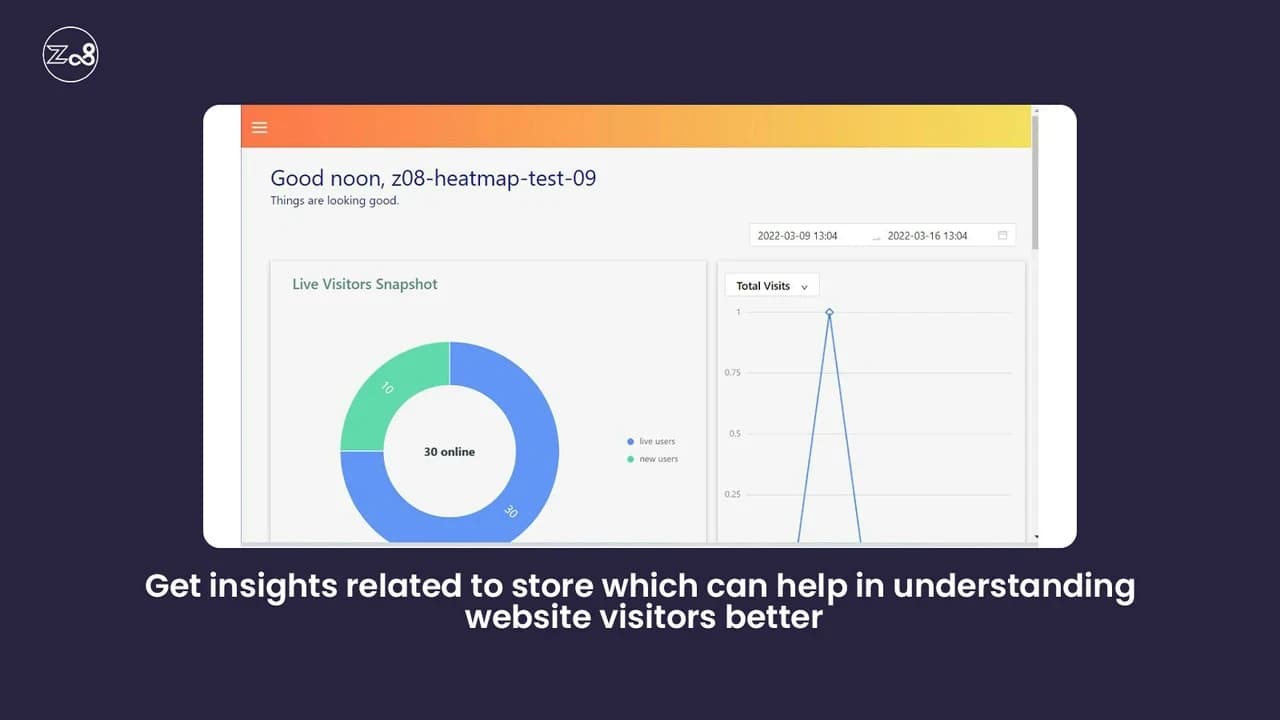
We rank findings by customer impact, supporting evidence and implementation effort.
Choose the changes to implement and approve their success criteria.
We make the agreed theme, asset or measurement changes and verify the affected journeys.
Review the changes before they reach customers.
We compare the evidence and explain what to keep, revert or investigate next.
Agree the next action; improvements are measured, never guaranteed.
Planning options, not a fixed package. Features and handover are agreed for your project.

Brand-led design and interactive shopping tools for bags and everyday-carry accessories.
View project
A Shopify app combining heatmaps, session recording and AI-assisted behavioural insight.
View project
Shopify improvements connected with search, advertising and social media support.
View projectNo. We define the hypothesis, measurement and guardrails before changing the experience, then assess the evidence. A test can be inconclusive or show that the original experience is better.
The appropriate method depends on traffic, event quality and the size of the behaviour being studied. For low-volume stores, usability research and technical evidence may be more useful than a split test.
No. We consider the affected customer journey, real usage conditions and business measurement alongside technical diagnostics. A laboratory score alone does not establish a commercial outcome.
We first identify the affected journey and verify the measurement. Changes are prioritised and released against an agreed scope, with a way to compare or reverse them.
Yes. Event definitions, consent behaviour, missing or duplicated events and reporting assumptions can be included in the initial assessment.
We record the result and its limitations, retain or restore the appropriate experience and use the finding to inform the next decision. Failed hypotheses still need an honest readout.
Share the affected journey and the evidence you already have.
What our clients value about working with Daphnis Labs.
The team at Daphnis Labs redefined what’s possible for Urbanface. They delivered a bespoke, animation-heavy website that remains incredibly quick and functional. The…
We wanted a unique, 'one-of-a-kind' feel for Glareen, and Daphnis Labs delivered an ecosystem that is both beautiful and technically superior. Their expertise in…
The level of technical depth Daphnis Labs brought to our Game project is unparalleled. While the front-end reel games are visually stunning and highly engaging, the…
Practical perspectives on AI, product engineering, commerce and modern software delivery.

Separate Kimi's API and coding-plan limits, budget cache writes correctly, and evaluate a repository refactor against behavior that must survive the change.
Read Blog
Budget beyond Mercury 3's launch discount, check its streaming and reasoning defaults, and measure how quickly a support agent produces a correct, usable answer.
Read Blog
Separate the model's context from each provider's limits, calculate a coding-pilot budget, and test a mobile layout repair before committing to self-hosted hardware.
Read Blog
Compare recorded and realtime transcription costs, identify launch-documentation conflicts, and test whether a corrected collection request survives the trip from audio to an operations draft.
Read Blog
Check the released model's token rates and API compatibility, calculate a realistic pilot budget, and evaluate image evidence against changing inventory records.
Read Blog
Separate GLM-Legal's beta access from unconfirmed API terms, interpret its independent benchmark results, and test document evidence with a reviewer-inclusive cost model.
Read Blog
Check the October 17 model update, peak and off-peak token rates, and new search charges, then evaluate an agent against versioned API evidence.
Read Blog
Understand Timestral's time-step limits and weight license, estimate a local forecasting job, and design a retail backtest that cannot see future sales.
Read Blog
Check Sonnet 5.5's token costs, thinking settings and conversation requirements, then evaluate coding changes against a concrete merchant-sorting fixture.
Read Blog
Check Gemini 4 Argon's access rules, shared token budget and launch pricing, then use a controlled supplier-data evaluation to plan an API migration.
Read Blog