What is the task?
Identify the user, their starting point and what completion means.
UI/UX design for web and mobile products, shaped around the tasks your users need to complete.
“Where can I change my visit?”
Identify the user, their starting point and what completion means.
Use observed behaviour, support feedback and the constraints of the product.
Turn assumptions into questions a prototype can help answer.
An illustrative prototype: choose a new slot, review it and return without losing the selection.
Studio consultation
30 minutes
Choose a new visit. Your current appointment stays in place until confirmation.
Behaviour belongs in the specification.
Document focus, validation, empty states and responsive changes so implementation does not depend on a single ideal screen.
Agree recruitment, consent and access to existing feedback before promising a research programme.
Name the journeys, component states and device sizes included in the handoff.
Agree who implements the design and how questions or deviations will be reviewed.

An editorial website that connects the studio’s spaces, materials and imagery.
View project
An opening film, image-led scrolling and a dedicated mobile experience.
View project
Supplier-data scraping and AI engineering for a cross-border shopping and warehouse platform.
View project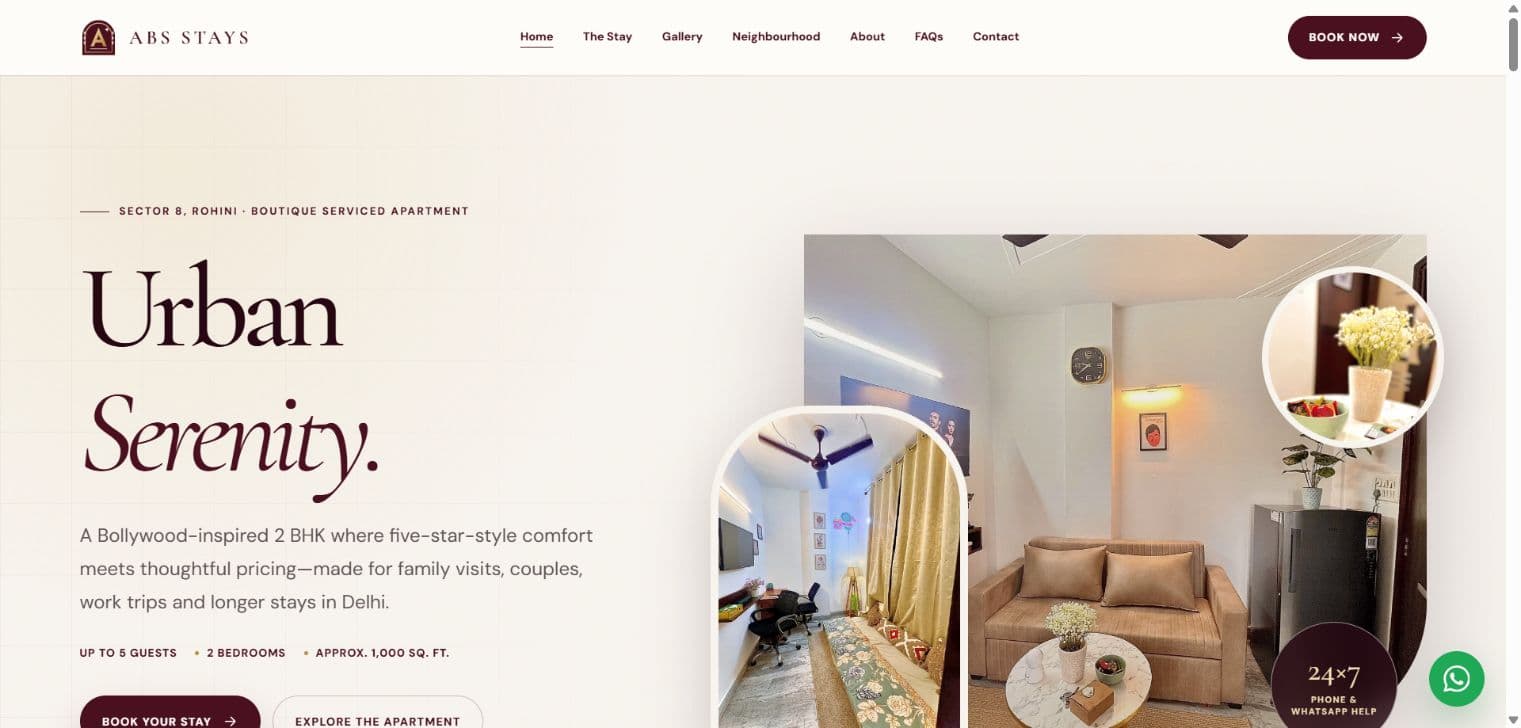
A shared-hosting application with encrypted document storage and a staff review console.
View projectNo. For a new product, we begin with the intended users, the task and the constraints. Existing products can add observed behaviour, support requests and usability evidence.
The method and recruitment are agreed for the engagement. Stakeholder opinions and an illustrative prototype are not substitutes for research with representative users.
Not by default. Design outputs cover the agreed prototype, component specifications and handoff. Engineering implementation can be scoped separately.
Yes. We review the existing components and usage rules, reuse suitable patterns and document additions or changes rather than replacing the system automatically.
Bring an existing flow, user feedback or a task your product needs to support.
What our clients value about working with Daphnis Labs.
The team at Daphnis Labs redefined what’s possible for Urbanface. They delivered a bespoke, animation-heavy website that remains incredibly quick and functional. The…
We wanted a unique, 'one-of-a-kind' feel for Glareen, and Daphnis Labs delivered an ecosystem that is both beautiful and technically superior. Their expertise in…
The level of technical depth Daphnis Labs brought to our Game project is unparalleled. While the front-end reel games are visually stunning and highly engaging, the…
Practical perspectives on AI, product engineering, commerce and modern software delivery.

Separate Kimi's API and coding-plan limits, budget cache writes correctly, and evaluate a repository refactor against behavior that must survive the change.
Read Blog
Budget beyond Mercury 3's launch discount, check its streaming and reasoning defaults, and measure how quickly a support agent produces a correct, usable answer.
Read Blog
Separate the model's context from each provider's limits, calculate a coding-pilot budget, and test a mobile layout repair before committing to self-hosted hardware.
Read BlogCompare recorded and realtime transcription costs, identify launch-documentation conflicts, and test whether a corrected collection request survives the trip from audio to an operations draft.
Read Blog
Check the released model's token rates and API compatibility, calculate a realistic pilot budget, and evaluate image evidence against changing inventory records.
Read BlogSeparate GLM-Legal's beta access from unconfirmed API terms, interpret its independent benchmark results, and test document evidence with a reviewer-inclusive cost model.
Read BlogCheck the October 17 model update, peak and off-peak token rates, and new search charges, then evaluate an agent against versioned API evidence.
Read Blog
Understand Timestral's time-step limits and weight license, estimate a local forecasting job, and design a retail backtest that cannot see future sales.
Read BlogCheck Sonnet 5.5's token costs, thinking settings and conversation requirements, then evaluate coding changes against a concrete merchant-sorting fixture.
Read BlogCheck Gemini 4 Argon's access rules, shared token budget and launch pricing, then use a controlled supplier-data evaluation to plan an API migration.
Read Blog