Destination structure
Reusable destinations, packages and itineraries with clear relationships.

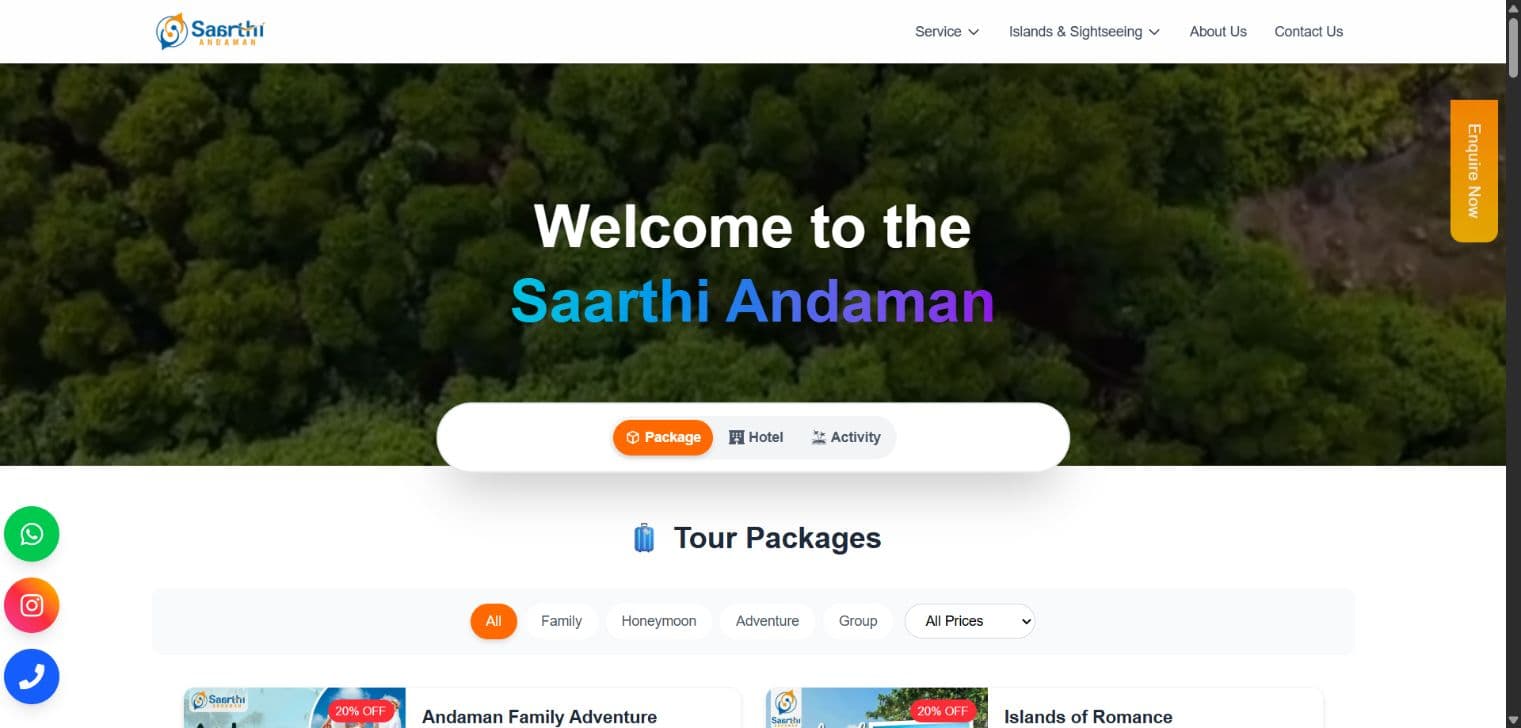
A Strapi-powered travel website with editable packages, itinerary pages and enquiries routed to your advisors.
Edit a draft, review it and publish the preview. Then create a sample enquiry.
Draft matches the published package
Package and version details accompany each enquiry.
Reusable destinations, packages and itineraries with clear relationships.
Metadata, crawlable pages, responsive media and measured load behaviour.
Drafts, publishing roles and a handover your content team can use.
The build includes agreed destination, package and itinerary models in Strapi, editor roles and handover. Publishing roles determine who can make changes visible on the site.
Drafting can be included, with sources and editorial review. Generated copy must not silently become an approved package inclusion, policy or availability claim.
Yes. We scope content mapping, URLs, redirects, media rights and analytics before migration. Existing search visibility and enquiry paths inform the launch checks.
Forms retain the package context and capture the details your advisors need. Routing, CRM delivery, duplicate handling and failed submissions are defined around your current process.
Bring your current website, package content and a few customer enquiries.
What our clients value about working with Daphnis Labs.
The team at Daphnis Labs redefined what’s possible for Urbanface. They delivered a bespoke, animation-heavy website that remains incredibly quick and functional. The…
We wanted a unique, 'one-of-a-kind' feel for Glareen, and Daphnis Labs delivered an ecosystem that is both beautiful and technically superior. Their expertise in…
The level of technical depth Daphnis Labs brought to our Game project is unparalleled. While the front-end reel games are visually stunning and highly engaging, the…
Practical perspectives on AI, product engineering, commerce and modern software delivery.

Separate Kimi's API and coding-plan limits, budget cache writes correctly, and evaluate a repository refactor against behavior that must survive the change.
Read Blog
Budget beyond Mercury 3's launch discount, check its streaming and reasoning defaults, and measure how quickly a support agent produces a correct, usable answer.
Read Blog
Separate the model's context from each provider's limits, calculate a coding-pilot budget, and test a mobile layout repair before committing to self-hosted hardware.
Read BlogCompare recorded and realtime transcription costs, identify launch-documentation conflicts, and test whether a corrected collection request survives the trip from audio to an operations draft.
Read Blog
Check the released model's token rates and API compatibility, calculate a realistic pilot budget, and evaluate image evidence against changing inventory records.
Read BlogSeparate GLM-Legal's beta access from unconfirmed API terms, interpret its independent benchmark results, and test document evidence with a reviewer-inclusive cost model.
Read BlogCheck the October 17 model update, peak and off-peak token rates, and new search charges, then evaluate an agent against versioned API evidence.
Read Blog
Understand Timestral's time-step limits and weight license, estimate a local forecasting job, and design a retail backtest that cannot see future sales.
Read BlogCheck Sonnet 5.5's token costs, thinking settings and conversation requirements, then evaluate coding changes against a concrete merchant-sorting fixture.
Read BlogCheck Gemini 4 Argon's access rules, shared token budget and launch pricing, then use a controlled supplier-data evaluation to plan an API migration.
Read Blog